
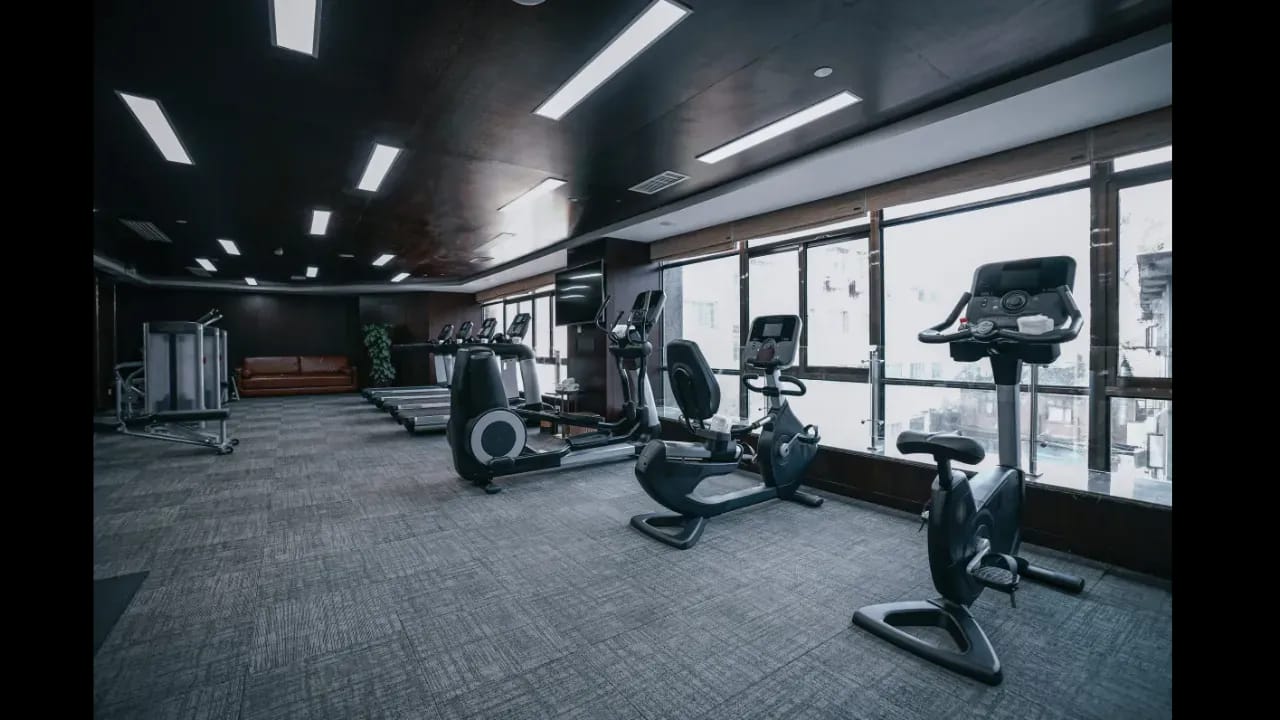
TL;DR: A self-service gym is one where the customer finds a slot, pays online and enters with a time-limited PIN code — no front desk. It suits smaller studios and gyms that want to sell hours beyond staffed opening times. This guide covers booking models, payments, smart locks, memberships, safety and a 90-day launch plan.
Who a Self-Service Gym Is For
A self-service gym is a fitness operation where the customer can complete the whole process without reception staff: choose an available time, make a reservation, pay, receive instructions and enter the space with a time-limited access code. It is especially useful for smaller gyms, personal training studios, private fitness boxes, residential gyms and operators who want to extend opening hours without increasing staffing costs.
This does not mean there is no customer care. It means the routine administration is handled by the system. A reservation system for a gym should keep availability, payments, memberships, access and communication in one place so the owner can focus on operations and growth instead of manually confirming every entry.
Reservine is built for this type of operation. It combines a reservation system for gyms, online payments, smart locks, SMS and email notifications, memberships, vouchers, reviews and branch administration.
Economics: Where the Self-Service Model Creates Revenue
The biggest difference from a traditional operation is that fixed costs can work for more hours every day. Rent, equipment, energy, software and maintenance cost money even when the space is empty. If you can safely open capacity outside personal training hours or reception hours, the same space can generate additional revenue without the same increase in administration.
A simple example:
- A personal trainer uses the gym only for part of the day.
- Free morning, evening or weekend blocks are offered as self-service entries.
- The client books a slot, pays online and receives an access code.
- The owner sees occupancy, revenue and reviews in the administration.
This model is not only about passive income. It is about better capacity utilization. If the space is currently empty for 50 percent of the week, the first goal does not need to be full automation. Start by selling a few safe time blocks and use data to add more later.
For more on monetizing capacity, read How to Turn Underused Assets Into a Profitable Resource.
Reservation Model: Flexible, Fixed or Scheduled Blocks
A self-service gym needs a clear way for customers to choose time. Reservine supports three practical models for private spaces.
Flexible Selection
The customer chooses the start and end time. This is useful when you want to sell time flexibly, for example 30 to 120 minutes depending on the customer need. It works well for private spaces, wellness, saunas or studios where visit length is not always the same.
Fixed Blocks
The customer clicks a predefined block, such as 60 or 80 minutes. This is usually the clearest option for a gym where you want a simple offer and smooth changeovers between customers.
Scheduled Blocks
The operator defines exact times, such as 06:00-08:00, 12:00-14:00 or an evening block. This works when the offer should be fixed and the price can vary by day or time.
A good reservation system for a fitness center should support these differences without forcing the operator to work around the calendar manually.
Access: Smart Locks and Time-Limited Codes
The biggest operational question for a self-service gym is access: how does the customer enter safely, and how do you make sure the code does not work outside the reservation window?
Reservine can connect a reservation with a smart lock. After a successful reservation, the system generates a unique access code and sends it to the customer before the booking starts. The code is tied to a specific time window. The operator does not need to hand over keys or manually send instructions.
For fitness operations, the important points are:
- the access code should be time-limited,
- each reservation should have its own instructions,
- the customer should receive SMS or email in time,
- the administration should show lock status and branch assignment,
- there must be a clear support path if something goes wrong.
Reservine communicates smart-lock integrations such as Nuki and TTLock. When selecting hardware, always verify the specific door, network coverage, power, emergency mode and service procedure.
Payments, Memberships and Vouchers
An operation without reception staff requires payment to happen in advance, or the customer must have a clear credit or membership setup. Manual tracking of unpaid entries is exactly the type of work you want to avoid.
Reservine supports online payments through Stripe. Operators can use card payments, Apple Pay and Google Pay. Payments are linked to the reservation, so the administration shows what was paid, what failed and what needs attention.
For gyms, the key commercial tools are:
- monthly memberships,
- discount codes,
- vouchers and gift cards,
- compensation after cancellation,
- payment and billing records.
Memberships are important for retention. A single entry can acquire a customer, but recurring revenue starts when the customer has a reason to come back. The system should therefore support both one-time reservations and a longer-term customer relationship.
Customer Communication
A self-service operation fails if customers do not know what to do. Automation is not only a calendar. It is also communication before, during and after the reservation.
At minimum, the operation should support:
- reservation confirmation,
- reminder before the booking,
- SMS or email with the access code,
- arrival instructions,
- cancellation and rescheduling rules,
- review request after completion.
Reservine supports SMS and email notifications, message templates and reviews. This also matters for marketing: reviews and feedback help improve the service and build trust with future customers.
Safety and Operating Rules
A self-service gym needs clear rules. Technology handles booking and entry, but the operator still has to think through safety, responsibility and communication.
Practical checklist:
- operating rules available before reservation,
- cancellation and rescheduling policy,
- emergency contact for customers,
- camera system aligned with privacy requirements,
- clear rules for equipment damage,
- regular space inspections,
- cleaning and maintenance plan,
- procedure for internet or lock outages.
For cameras and personal data, the issue is not only technical setup. You also need proper customer information, a legal basis for processing and reasonable retention periods. This article is not legal advice, but these points should be resolved before launching live self-service operation.
What to Watch in Administration
After launch, do not let the operation run blind. Track especially:
- occupancy by day and time,
- revenue by reservation type,
- repeat customers,
- membership usage,
- cancellations and failed payments,
- reviews and complaints,
- access problems.
Reservine includes administration for reservations, calendar, branches, payments, vouchers, memberships, reviews and reports. For a gym with multiple branches, the advantage is that everything is managed from one account while still allowing branch-specific settings.
90-Day Launch Plan
Days 1-15: Offer and Rules
Write down exactly what you sell: single entry, private block, membership, personal training outside the self-service mode or a combination. Set block length, pricing, cancellation rules and operating rules.
Days 16-30: Reservation System and Payments
Prepare the reservation page, services, opening hours, prices and payment methods. If you already have a website, add the reservation button using How to Integrate a Reservation Button Into Your Website. If you use WordPress, Wix or another CMS, read Integrating Reservine Into WordPress, Wix and Other CMS Platforms.
Days 31-45: Access and Test Operation
Connect the smart lock, test SMS codes and prepare emergency scenarios. Make test reservations with people you trust and watch where they ask questions or get stuck.
Days 46-60: First Paying Customers
Launch a limited number of blocks. Do not open the whole week immediately. Verify payments, access, cleaning, support and customer reactions. Start collecting reviews.
Days 61-90: Expansion and Optimization
Add more time blocks, adjust pricing based on occupancy and offer memberships for regular customers. Evaluate which blocks generate revenue and which only complicate operations.
FAQ
Do I need reception staff for a self-service gym?
Not necessarily. If reservations, payments, access codes, operating rules and support are set correctly, part of the operation can run without reception staff. You still need maintenance, cleaning and responsible oversight.
What kind of reservation system makes sense for a gym?
Look for a system that handles more than a calendar. For a self-service gym, payments, memberships, access, SMS, reviews and reporting are connected parts of one process.
Can a gym operate 24/7?
Technically yes, but we recommend starting with limited blocks and expanding based on data. Nonstop operation requires well-designed safety, maintenance and emergency procedures.
How does the customer enter the space?
Typically, the customer receives a time-limited PIN code by SMS or email. The code is tied to the reservation and the smart lock.
How much does Reservine cost?
The public baseline price is 500 CZK per month after the first month free. SMS notifications and online payments are charged separately based on usage.
Next Step
If you are planning a self-service gym, start by designing the reservation model: what block length you will sell, when the space should be available, how access will work and how payments will be handled. Then choose the technology.
We built Reservine so these parts work together. See the reservation system for gyms page or contact us through the contact page, and we will go through your specific operation with you.